


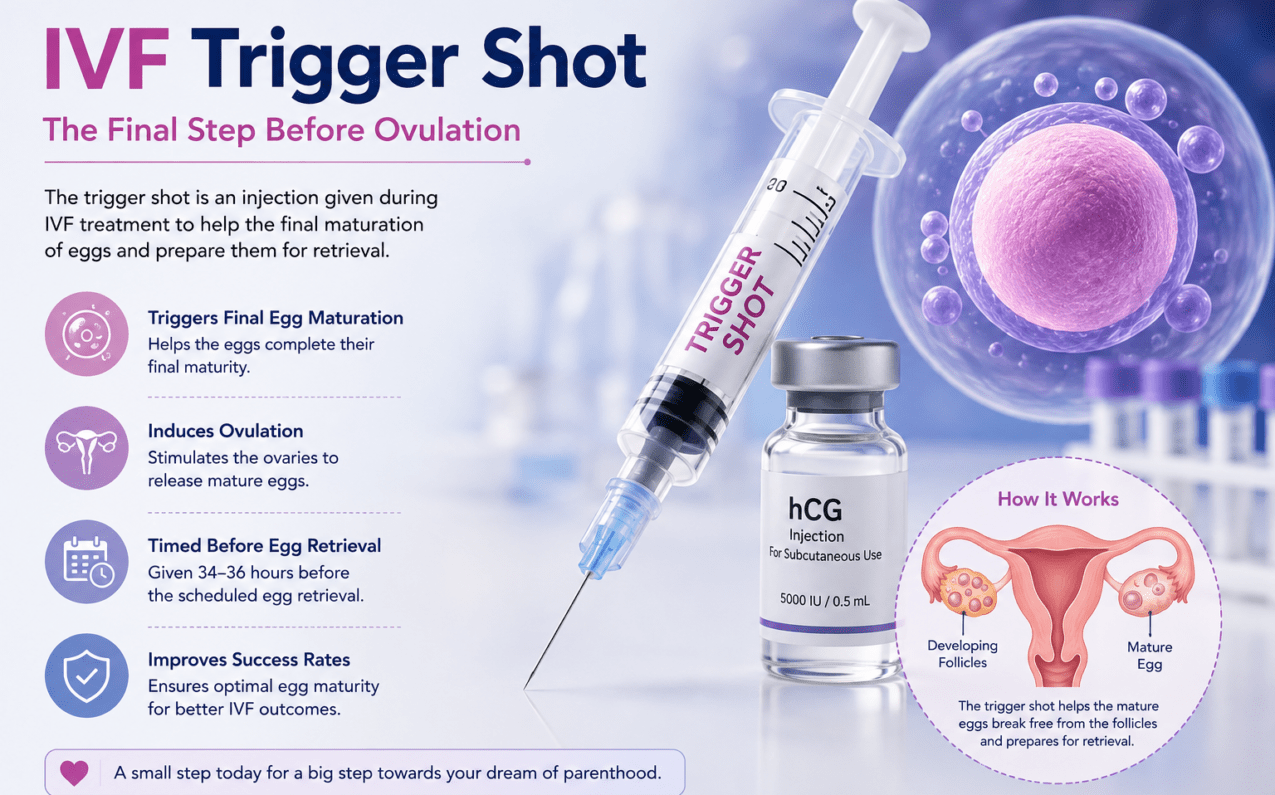
The IVF trigger shot is an injection given near the end of ovarian stimulation to help eggs complete their final stage of maturation before egg retrieval. It is a carefully timed part of an IVF cycle.
The trigger injection is usually given about 34–36 hours before egg retrieval. The exact timing depends on your treatment plan and your fertility specialist’s instructions.
For patients undergoing IVF at EVA IVF & Women’s Centre in Chennai, understanding the trigger shot can make this stage of treatment easier to follow. EVA provides IVF, ICSI, fertility assessment, and other reproductive treatments as part of its fertility care services.
What Is a Trigger Shot in IVF?
An IVF trigger shot is a hormone injection that stimulates the final maturation of eggs before they are collected. It acts like the body’s natural hormonal signal that normally occurs before ovulation.
During IVF, ovarian stimulation medicines help several follicles develop. Ultrasound scans and hormone tests are used to monitor this development. When the follicles reach the appropriate stage, the fertility specialist selects the timing for the trigger injection.
The trigger activates the final maturation process in the eggs. Egg retrieval is then planned before natural ovulation occurs. The American Society for Reproductive Medicine explains that hCG or other trigger medicines can cause final egg maturation, with retrieval commonly performed about 34–36 hours later.
The trigger is therefore different from the earlier stimulation injections. Stimulation medicines help follicles grow. The trigger prepares the eggs for retrieval.
Your fertility specialist decides the appropriate trigger type and timing based on factors such as your ovarian response, follicle development, treatment protocol, and risk of ovarian hyperstimulation syndrome.
Why Is the Trigger Shot Important in IVF?
The trigger shot is important because it helps eggs reach the final stage of maturation before retrieval. Mature eggs have a better opportunity to be fertilised in the laboratory.
The trigger also helps the fertility team coordinate egg retrieval with the maturation process. This timing is particularly important because retrieval needs to take place before the eggs are naturally released from the ovaries.
The process generally follows this sequence:
- Ovarian stimulation medicines encourage several follicles to grow.
- Ultrasound scans monitor follicle development.
- Blood tests may be used to assess hormone levels.
- The fertility specialist decides when the follicles are ready.
- The trigger injection is administered at the prescribed time.
- Egg retrieval is scheduled approximately 34–36 hours later.
The timing can vary between treatment protocols and patients. Your clinic’s instructions should always take priority over general information found online.
At EVA IVF & Women’s Centre, treatment plans are based on individual medical history, test results, and fertility goals.
What Types of Trigger Shots Are Used in IVF?
The main types of IVF trigger medicines include hCG triggers, GnRH agonist triggers, and dual triggers. The choice depends on the patient’s IVF protocol and clinical situation.
| Trigger type | Main role |
| hCG trigger | Mimics the action of the natural LH surge and supports final egg maturation |
| GnRH agonist trigger | Stimulates the body’s own LH and FSH release |
| Dual trigger | Combines a GnRH agonist with hCG in selected treatment plans |
hCG has traditionally been used to trigger final egg maturation. GnRH agonist triggers may be preferred in some patients because they can reduce the risk of moderate-to-severe ovarian hyperstimulation syndrome, particularly in appropriate antagonist IVF protocols.
A dual trigger combines two hormonal signals. Your fertility specialist may consider this option based on your ovarian response and treatment goals.
The trigger should not be selected based only on information from another patient’s IVF cycle. The appropriate medicine and dose depend on your individual treatment plan.
When Should You Take the IVF Trigger Shot?
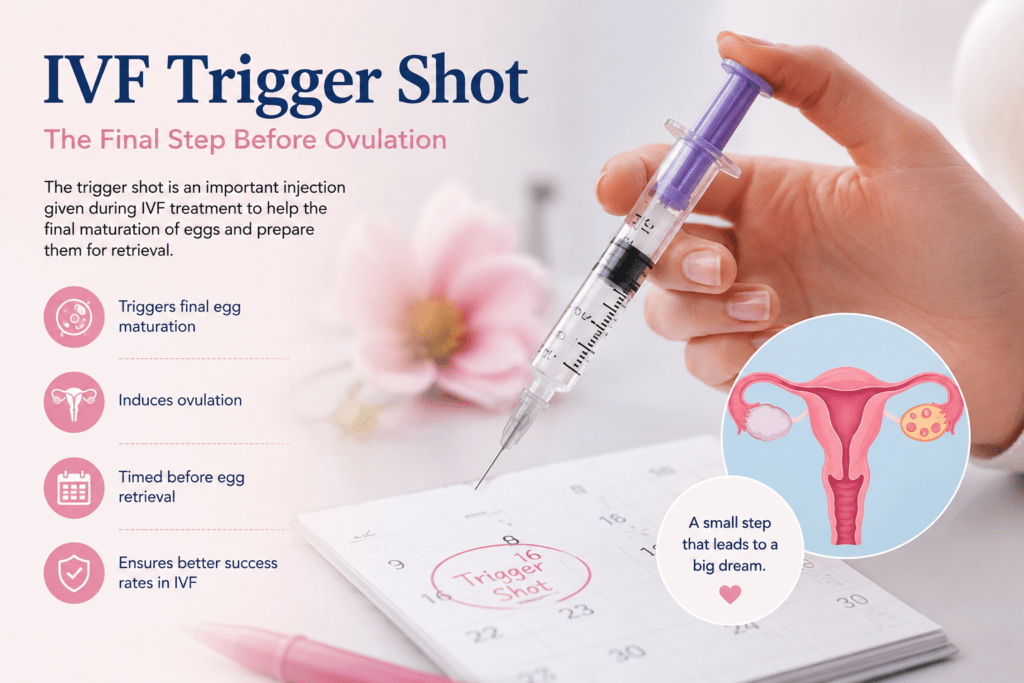
The IVF trigger shot is commonly given around 34–36 hours before egg retrieval, but your fertility clinic will give you an exact time to follow.
Trigger timing matters because egg retrieval is planned around the expected maturation of the eggs. Some fertility centres schedule the trigger exactly 36 hours before egg collection.
Patients should therefore:
- Write down the prescribed trigger time.
- Set an alarm before the scheduled injection.
- Follow the medication instructions provided by the fertility team.
- Avoid changing the timing without speaking to the clinic.
- Contact the fertility team promptly if the injection is missed or taken late.
A significant delay can affect treatment planning. NHS fertility guidance specifically notes that trigger timing is important and advises patients to contact their treatment unit if the injection is taken late.
Your individual instruction from the IVF team is more important than a general 36-hour guideline.
What Happens After the IVF Trigger Shot?
After the trigger shot, the eggs continue their final maturation before egg retrieval. The retrieval is usually scheduled approximately 34–36 hours after the trigger.
The next stage is egg collection. During this procedure, a fertility specialist uses ultrasound guidance to collect eggs from the ovarian follicles. The retrieved eggs are then assessed in the embryology laboratory.
Depending on the treatment plan, mature eggs may be fertilised using conventional IVF or ICSI. The resulting embryos may later be transferred or frozen.
Patients may experience mild symptoms after the injection. These can vary depending on the trigger medicine and individual response. Some people may notice bloating, pelvic discomfort, breast tenderness, headache, or tiredness.
These symptoms do not confirm whether the IVF cycle will be successful. The number and maturity of retrieved eggs, fertilisation, embryo development, and other factors influence the eventual outcome.
What Happens If You Take the Trigger Shot at the Wrong Time?
Taking the trigger shot at the wrong time can interfere with the planned egg retrieval because the treatment depends on precise coordination between egg maturation and collection.
If you take the injection late, early, or forget it completely, contact your fertility clinic as soon as possible. Do not make independent changes to the rest of your medication schedule.
The clinic may assess the situation and decide the safest next step. NHS guidance notes that incorrect trigger timing can affect egg maturity and retrieval planning.
The best approach is to keep the trigger medication ready before the scheduled time and confirm the instructions with your fertility team. Patients at EVA IVF & Women’s Centre can discuss treatment-related concerns with their fertility specialists as part of their personalised care plan.
What Side Effects Can Occur After an IVF Trigger Shot?
Side effects after an IVF trigger shot depend on the medication used and the patient’s individual response. Mild symptoms can occur during the period between the injection and egg retrieval.
Possible symptoms can include:
- Abdominal bloating
- Pelvic discomfort
- Breast tenderness
- Headache
- Fatigue
- Injection-site discomfort
Patients should contact their fertility team if symptoms are severe, rapidly worsening, or concerning. Significant abdominal swelling, severe pain, vomiting, breathing difficulty, or rapid weight gain can require medical assessment because ovarian hyperstimulation syndrome can occur during fertility treatment.
The risk of OHSS is influenced by ovarian response and the type of treatment used. ASRM guidance supports the use of GnRH agonist triggers in appropriate patients to reduce the risk of moderate-to-severe OHSS.
Do not stop or change prescribed fertility medicines without speaking with your fertility specialist.
Frequently Asked Questions
In most IVF cycles, your clinic will provide specific instructions about food and drink before egg retrieval. Follow those instructions rather than making dietary changes based only on the trigger injection.
A trigger medicine is commonly used to induce final egg maturation before planned egg retrieval, but the exact trigger type depends on the IVF protocol and individual medical circumstances.
Your fertility specialist may advise avoiding intercourse around the trigger and egg-retrieval period. The recommendation can depend on ovarian enlargement, the risk of ovarian complications, and your treatment plan.
Do not assume that every medicine is suitable during an IVF cycle. Tell your fertility team about all prescription medicines, over-the-counter medicines, and supplements you take before using them.
The hormones used during an IVF cycle can affect the timing and pattern of bleeding. Your fertility clinic can explain what bleeding is expected based on your specific treatment protocol.
Storage requirements vary between trigger medicines. Check the instructions supplied with your specific medication and follow the storage conditions given by your fertility clinic or pharmacist.
Do not take a painkiller without checking whether it is appropriate for your IVF cycle. Your fertility clinic can recommend a suitable option if you experience discomfort.
Travel plans should be discussed with your fertility clinic because egg retrieval is scheduled within a specific timeframe after the trigger. Staying accessible to your treatment centre is particularly important during this period.
The trigger is used to support final egg maturation. Egg quality itself depends on multiple biological factors and cannot be determined from the trigger injection alone.
Keep the prescribed medication, required injection supplies, storage materials if applicable, and your clinic’s instructions available. Setting an alarm for the exact prescribed time can also help prevent timing errors.
Get Personalised Guidance About Your IVF Trigger Shot
The IVF trigger shot is a short but important stage of fertility treatment. Correct timing helps coordinate final egg maturation with egg retrieval.
Every IVF cycle is different. The trigger medicine, dose, timing, and retrieval schedule should be decided by your fertility specialist.
EVA IVF & Women’s Centre provides personalised fertility care in Chennai, including IVF and ICSI treatment. The centre has clinics in locations including Madipakkam, Adyar, Mannadi, and OMR.
If you are preparing for an IVF cycle or have questions about your trigger injection, speak with the EVA IVF fertility team for advice based on your treatment plan.
Book a consultation with EVA IVF & Women’s Centre
